Yukata: A Garment That Evolved Alongside Japan’s Bathing Culture
The Japanese word yukata (浴衣) is written with two Chinese characters (kanji): 浴, meaning “bath” or “bathing,” and 衣, meaning “clothing” or “garment.”
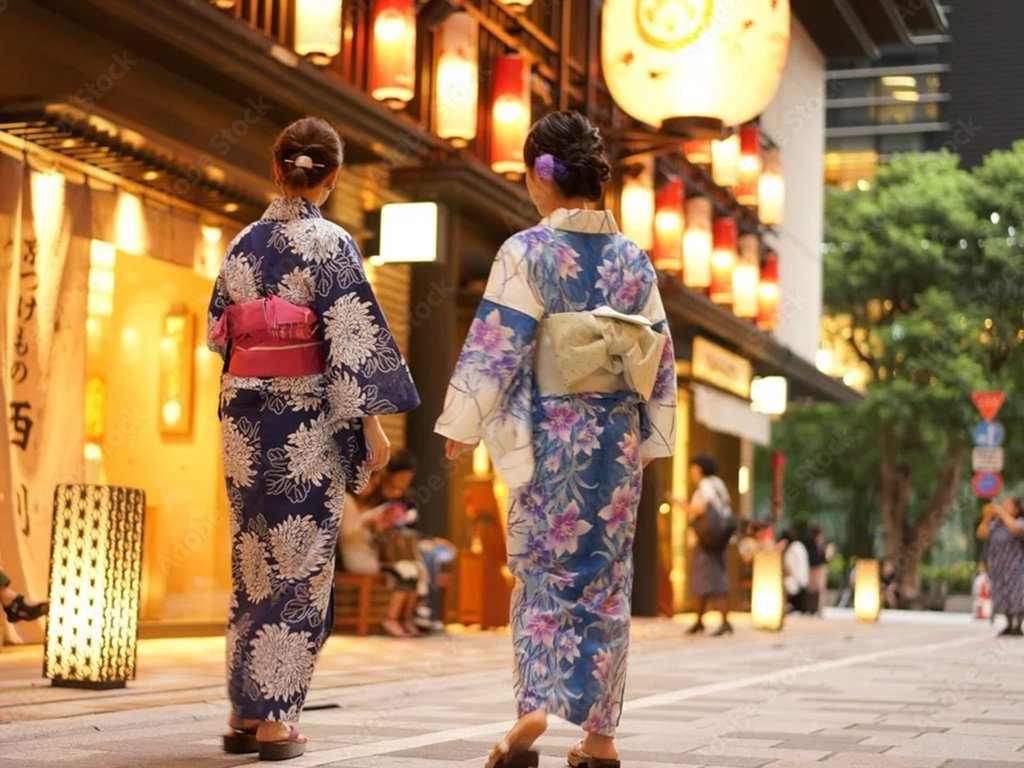
The yukata is a traditional Japanese summer kimono garment that developed alongside the history of bathing in Japan.
During the Nara and Heian periods, people did not bathe in tubs as they do today. Instead, members of the upper class entered steam baths while wearing a lightweight linen garment.
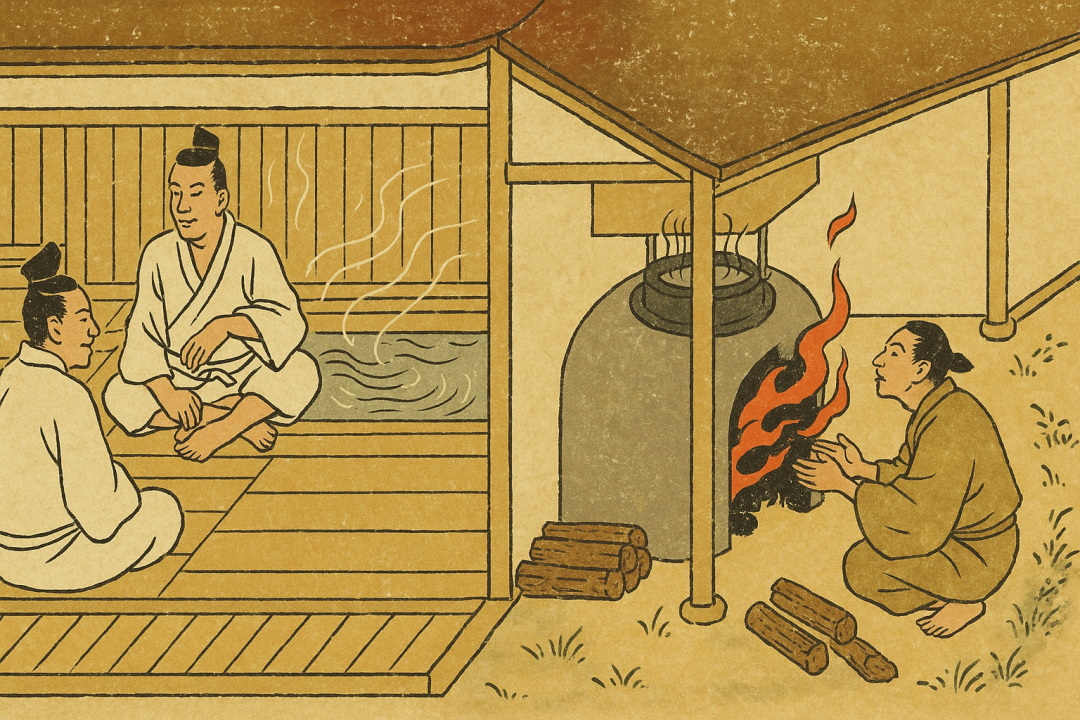
Later, during the Muromachi period, the yukata came to be worn after bathing, much like a modern bathrobe. It absorbed perspiration and allowed the body to cool and dry comfortably.
The name yukata is derived from yukatabira (literally, “bath robe”), which referred to a lightweight linen garment called a katabira that was worn during bathing.
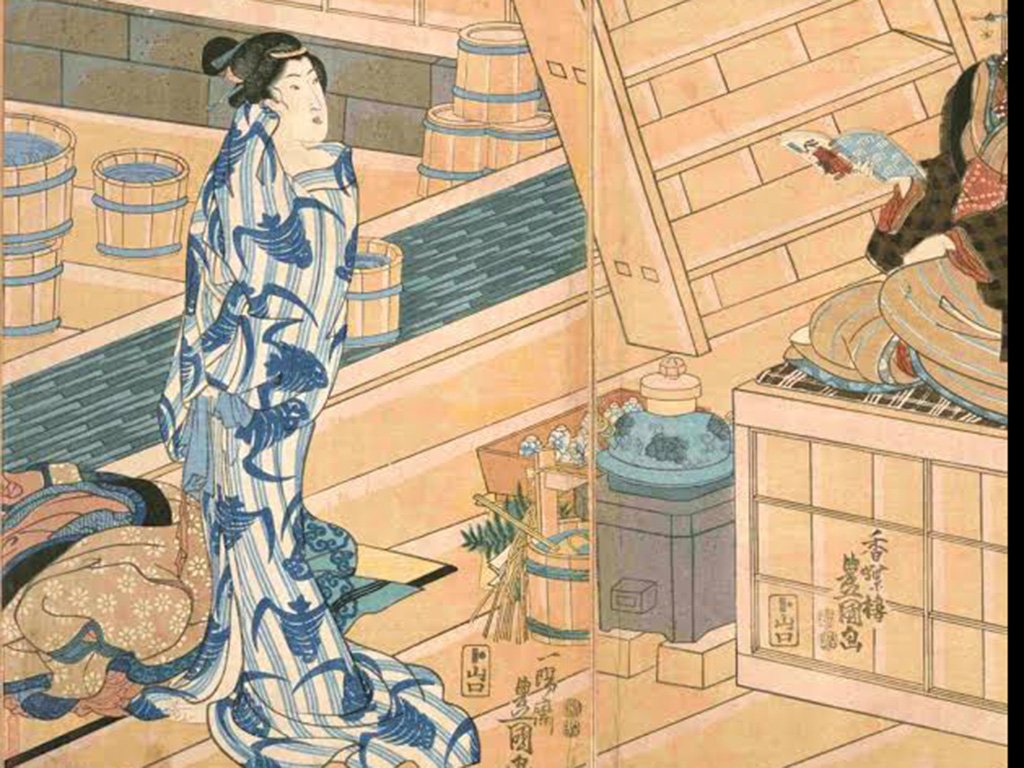
In the Edo period, cotton, which had previously been imported, began to be produced domestically in large quantities. As a result, cotton rapidly replaced linen as the primary material for everyday clothing worn by ordinary people.
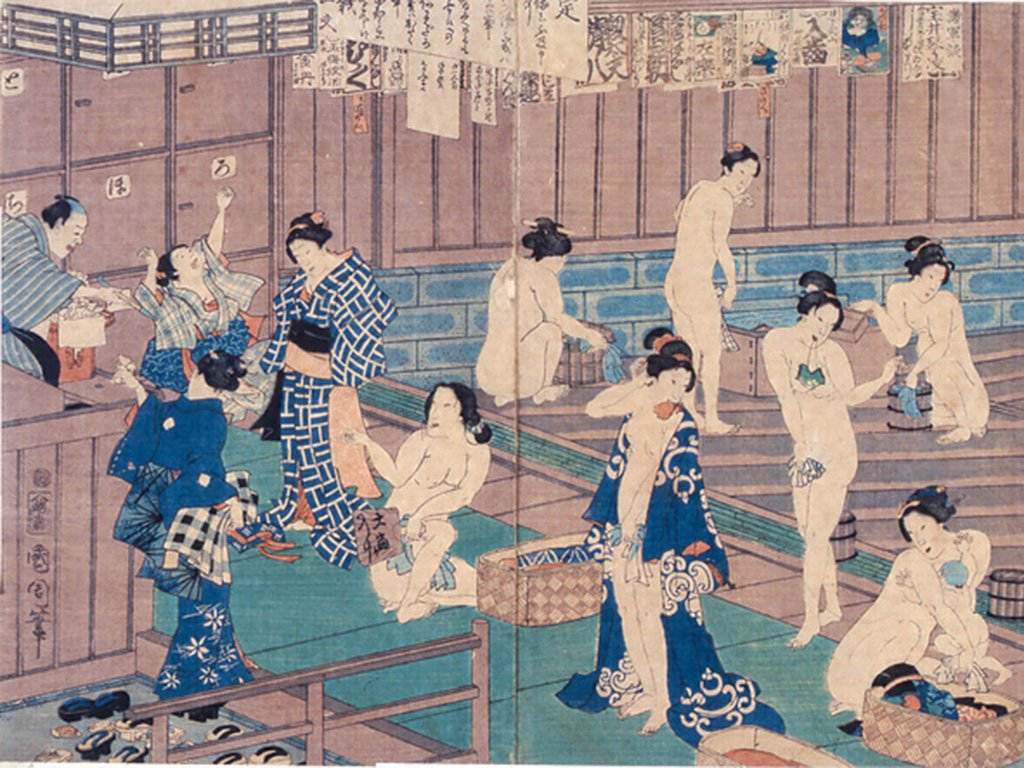
By the middle of the Edo period, public bathhouses had become widespread, and soaking in hot baths became the norm, replacing steam baths. People began bathing without clothing. In the late Edo period, it became common to relax upstairs in bathhouses while wearing a yukata after bathing. As a result, the yukata came to be worn not only as a post-bath garment but also as comfortable homewear and casual loungewear.
During the Meiji, Taisho, and Showa periods, advances in dyeing and textile production made it possible to create colorful yukata. Today, a wide variety of styles are available, ranging from traditional indigo-dyed designs AIZOME in white and navy to vibrant modern patterns.
Today, the yukata is worn not only for summer festivals MATSURI and HANABI fireworks displays but also as light casual wear, much like an unlined kimono. As a symbol of the Japanese summer, it continues to be enjoyed by people of all ages and genders.